
AI Is No Longer Optional for Broadband Providers
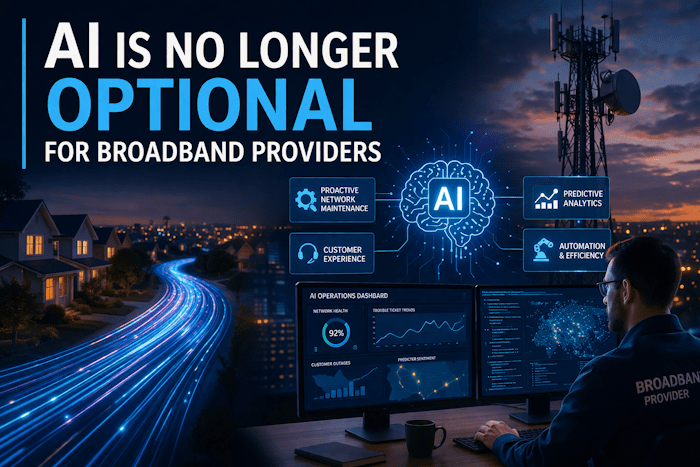
Federal broadband funding is unlocking historic deployment mandates for internet service providers across the United States. Without AI-integrated operations, most providers are not equipped to meet the scale, compliance, and reporting demands that come with it.
Beyond the Tool Stack
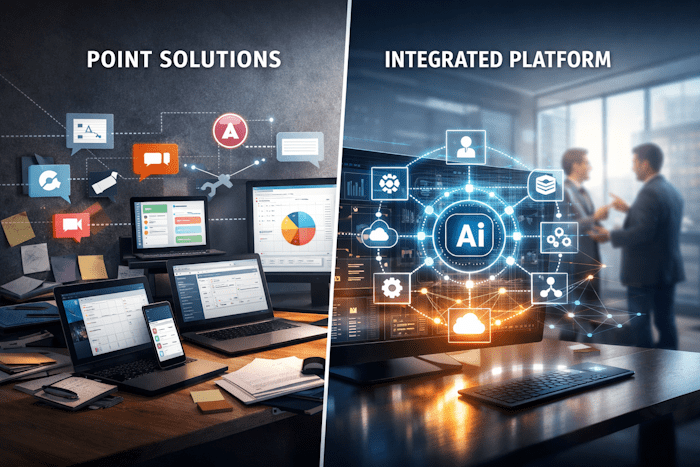
Buying a single tool can solve an immediate problem. Building around an integrated platform can change how an organization operates. As enterprise software portfolios expand and agentic artificial intelligence moves into real workflows, the difference is becoming more strategic than technical.
Enterprises Rebalance for Cost, Speed, and Scale

The commercial AI market is moving past the assumption that bigger always means better. As enterprises shift from experimentation to scaled deployment, smaller language models, lower-cost inference, and compute-efficient architectures are becoming central to how businesses buy, build, and operationalize AI.
Turning Market Visibility Into Subscriber Growth

Executive Summary Internet Service Providers (ISPs) are under constant pressure to grow efficiently, defend market share, and allocate marketing dollars with precision. Yet many providers still make campaign decisions with limited visibility into where the best opportunities exist, how competitors are positioned, and whether a given investment is likely to produce an acceptable return. This […]
Adopt AI or Fall Behind
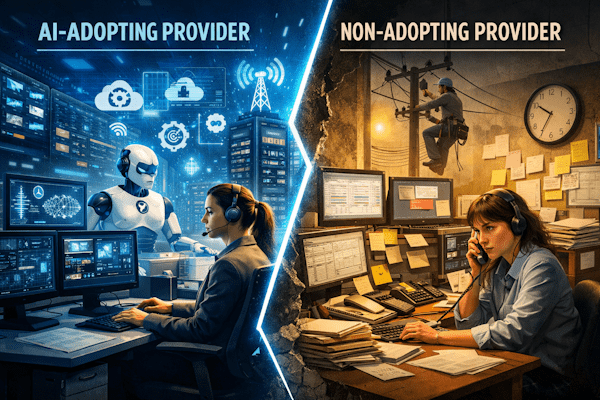
For service providers, the divide is no longer between companies experimenting with artificial intelligence and those waiting for perfect clarity. It is increasingly between operators who are redesigning customer service and operations around AI and those who are absorbing higher costs, slower response times, and weaker competitive positioning as rivals move ahead.
AI Ads Find a New Engine

Artificial intelligence is moving deeper into marketing and advertising, not only as a copy and image tool, but as a campaign engine tied to targeting, measurement, commerce, and platform partnerships. The shift now underway suggests that advertisers are beginning to treat foundation models and agentic systems as operating infrastructure rather than experimental creative aids.
How AI Is Reshaping the Org Chart

Companies are moving past isolated artificial intelligence pilots and into a harder phase: redesigning work itself. The most successful adopters are not merely adding tools; they are rebuilding teams, governance, and daily workflows around human-and-AI collaboration.
Vertical AI

Agentic Artificial Intelligence (Agentic AI) and multimodal models are moving from general chat tools into industry-specific platforms. The next wave is being built around execution: systems that can read documents, interpret images, process voice or sensor inputs, and act across business workflows in finance, healthcare, logistics, and manufacturing.
AI ROI

Boards are moving past AI enthusiasm and asking harder questions: Which use cases improve margins, which controls reduce risk, and which deployments can scale without creating compliance or security problems? The new mandate is not more pilots, but measurable business value under disciplined governance.
Why AI Agents Are Becoming the Next Operating Layer for Enterprise Efficiency
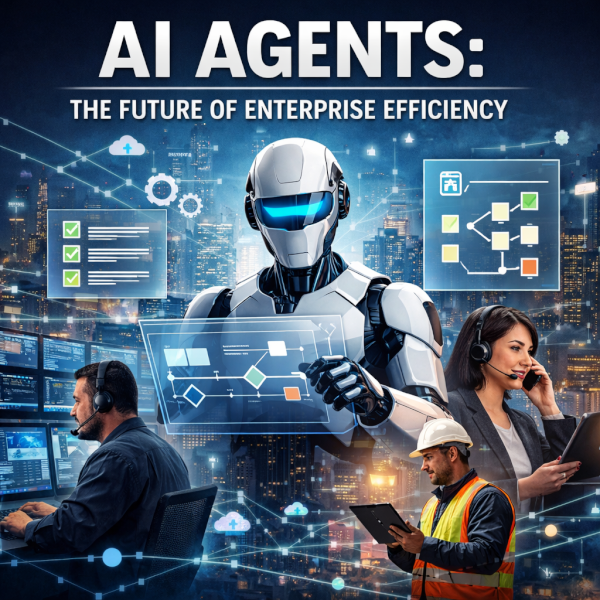
AI agents are shifting enterprise automation from “assistance” to execution, triaging work, coordinating handoffs, and completing governed tasks across service, IT, and operations. The strongest early results are emerging from organizations that deploy agents with clear return-on-investment targets, permissions, and audit controls, rather than treating agentic AI as a standalone experiment.